pallets/flask architecture diagram
How pallets/flask is built, drawn from its code at 49943b5 on 2026-11-08 by Plotix's agent.
Architecture
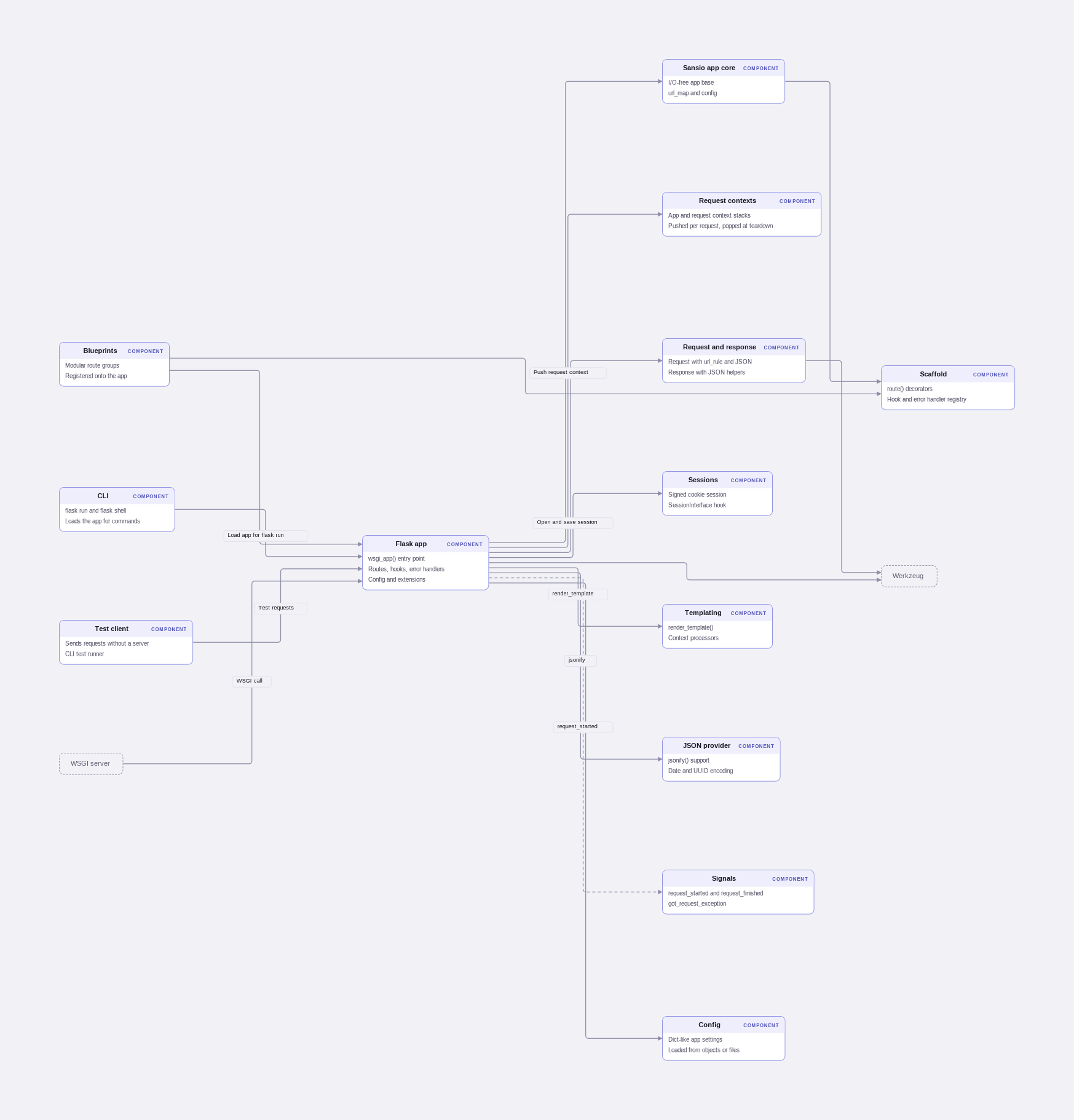
What Flask is made of: the app object and its helpers, and what it talks to.
Open the picture for full size (SVG).
Parts
- Flask app
wsgi_app() entry point · Routes, hooks, error handlers · Config and extensions - Sansio app core
I/O-free app base · url_map and config - Scaffold
route() decorators · Hook and error handler registry - Blueprints
Modular route groups · Registered onto the app - Request contexts
App and request context stacks · Pushed per request, popped at teardown - Request and response
Request with url_rule and JSON · Response with JSON helpers - Sessions
Signed cookie session · SessionInterface hook - Templating
render_template() · Context processors - JSON provider
jsonify() support · Date and UUID encoding - CLI
flask run and flask shell · Loads the app for commands - Signals
request_started and request_finished · got_request_exception - Config
Dict-like app settings · Loaded from objects or files - Test client
Sends requests without a server · CLI test runner - Werkzeug
- WSGI server
How they connect
- WSGI server → Flask app WSGI call
- Flask app → Request contexts Push request context
- Flask app → Request and response
- Flask app → Sessions Open and save session
- Flask app → Templating render_template
- Flask app → JSON provider jsonify
- Flask app → Signals request_started
- Flask app → Config
- CLI → Flask app Load app for flask run
- Test client → Flask app Test requests
- Flask app → Sansio app core
- Sansio app core → Scaffold
- Blueprints → Scaffold
- Blueprints → Flask app
- Flask app → Werkzeug
- Request and response → Werkzeug
Request flow
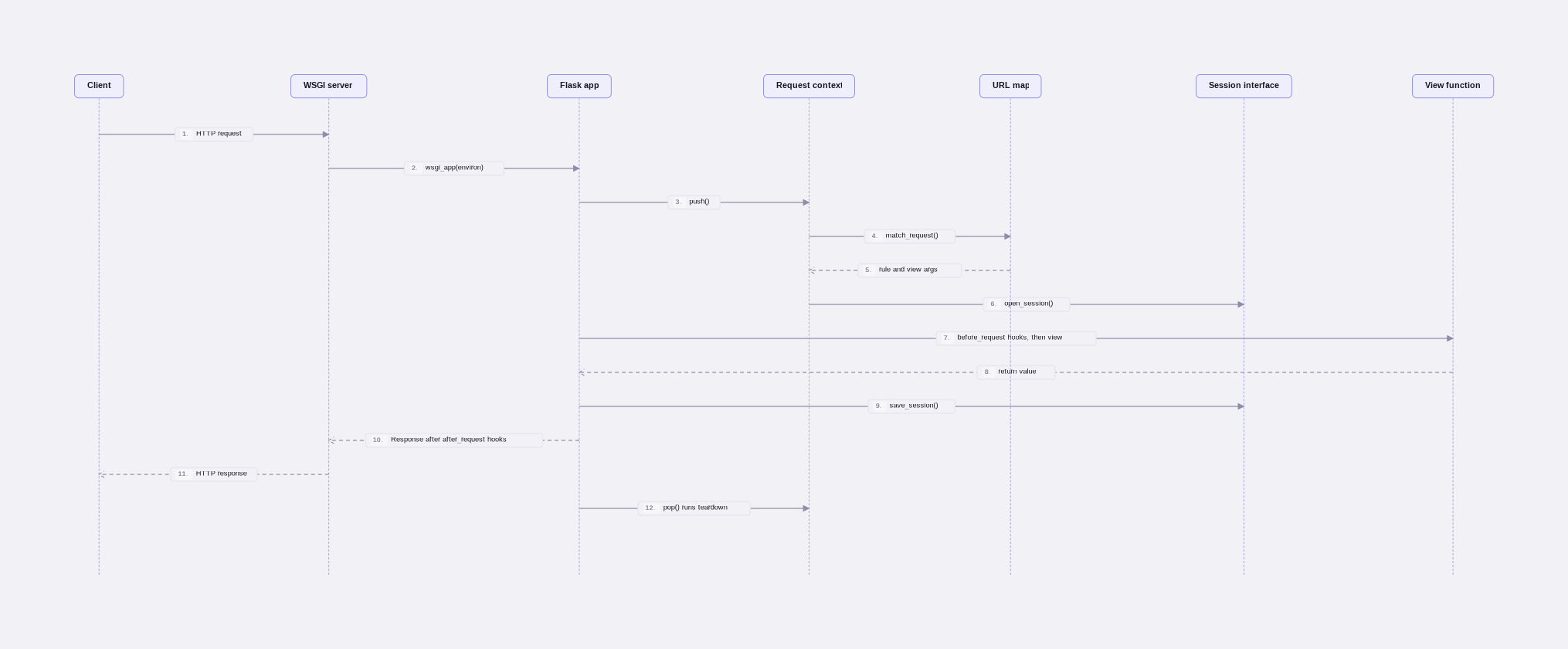
What happens to one HTTP request, from the WSGI server to the view and back.
Open the picture for full size (SVG).
Parts
- Client
- WSGI server
- Flask app
- Request context
- URL map
- Session interface
- View function
How they connect
- Client → WSGI server HTTP request
- WSGI server → Flask app wsgi_app(environ)
- Flask app → Request context push()
- Request context → URL map match_request()
- URL map → Request context rule and view args
- Request context → Session interface open_session()
- Flask app → View function before_request hooks, then view
- View function → Flask app return value
- Flask app → Session interface save_session()
- Flask app → WSGI server Response after after_request hooks
- WSGI server → Client HTTP response
- Flask app → Request context pop() runs teardown
Core classes
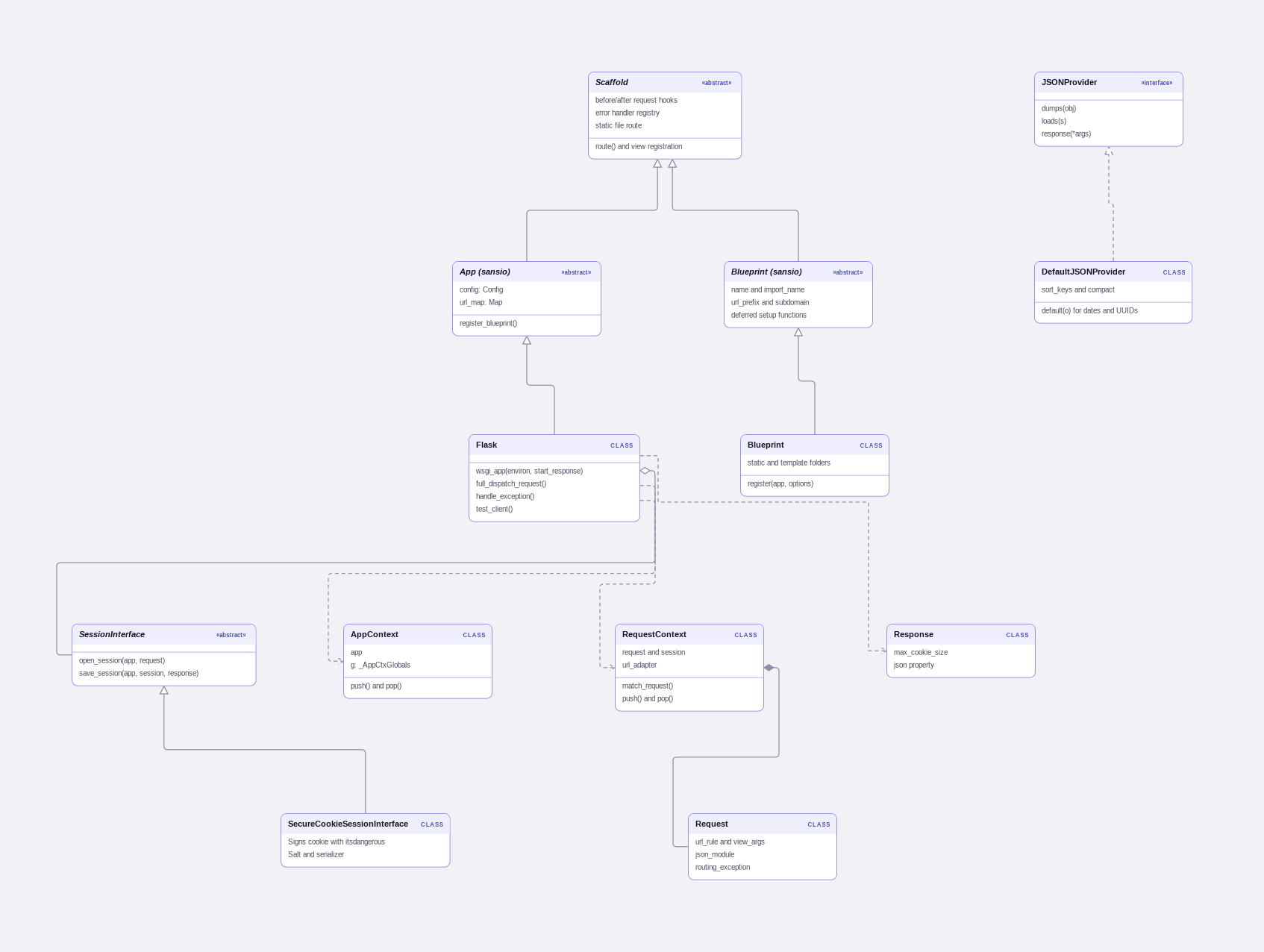
Inheritance and composition of the main Flask classes.
Open the picture for full size (SVG).
Parts
- Scaffold
- App (sansio)
- Flask
- Blueprint (sansio)
- Blueprint
- SessionInterface
- SecureCookieSessionInterface
- JSONProvider
- DefaultJSONProvider
- AppContext
- RequestContext
- Request
- Response
How they connect
- App (sansio) → Scaffold
- Flask → App (sansio)
- Blueprint (sansio) → Scaffold
- Blueprint → Blueprint (sansio)
- SecureCookieSessionInterface → SessionInterface
- DefaultJSONProvider → JSONProvider
- Flask → SessionInterface
- Flask → RequestContext
- Flask → AppContext
- RequestContext → Request
- Flask → Response
Draw your own repo
Plotix's agent reads your code and draws its architecture, and the diagram warns you when the code moves on.
Try Plotix